The Postal Museum’s colonial History
I was asked by the Postal Museum in North London, to develop and perform a story inspired by their current exhibition: Voices of Resistance: Slavery and Post in the Caribbean.
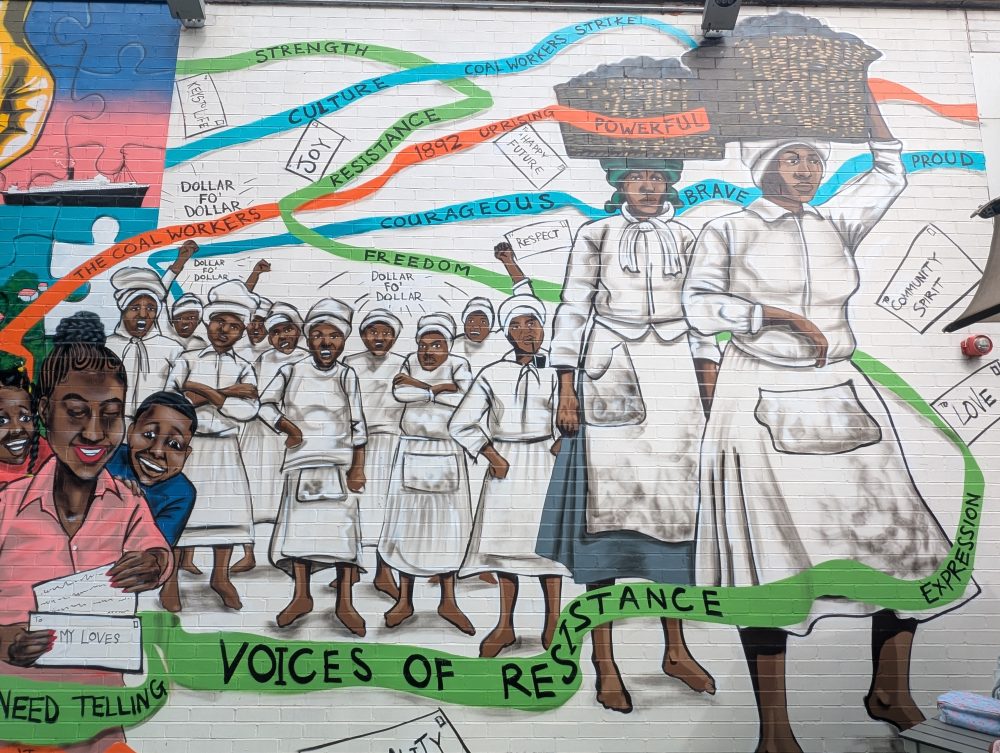
They worked with a range of partners, including ‘Dollar fo’ Dollar,’ a community organisation based on the Caribbean island of St. Thomas to produce Voices of Resistance. The exhibition shows how the postal service enabled and benefited from the forced labour of enslaved Africans. I was pleased to see that they have included many different perspectives (not just from the plantation owners), with photographs of the female coal workers who were used to carry 100 Ibs of coal in baskes on their head to fuel the ships which carried the correspondence from the island to the UK. Those that were free, were paid 1 dollar for every 100 baskests that they loaded and carried.
The exhibition included transcribed letters and videos of remembrance from culture bearers on the island of St Thomas and documented one of the notable strikes led by ‘Queen Coziah’.
My story weaved together West African folkore and legends of the indigenous Taino people. This is an important way for me to decolonise the story and share part of the enslaved people’s culture and rituals that they would have passed down orally. It is also a helpful artistic technique to include folklore alongside parts of the story where I share the brutal reality of their hard working day and exploitation. It allows for light and darkness to coexist and bring everyone along with me.
As I told the story for the first time, adults and children expressed shock and visible outrage at the circumstances that the coal workers were exposed to. I always end on a note of rememberance and celebration, bringing the story up to present day with all that is being done on the islands and in the UK to shine a light on revolutionary rule breakers and leaders, in particular Black women whose legacies have been overlooked.